
Most people hear "off-grid" and picture a tent. Maybe a composting toilet. Maybe no hot water.
That is not what this is.
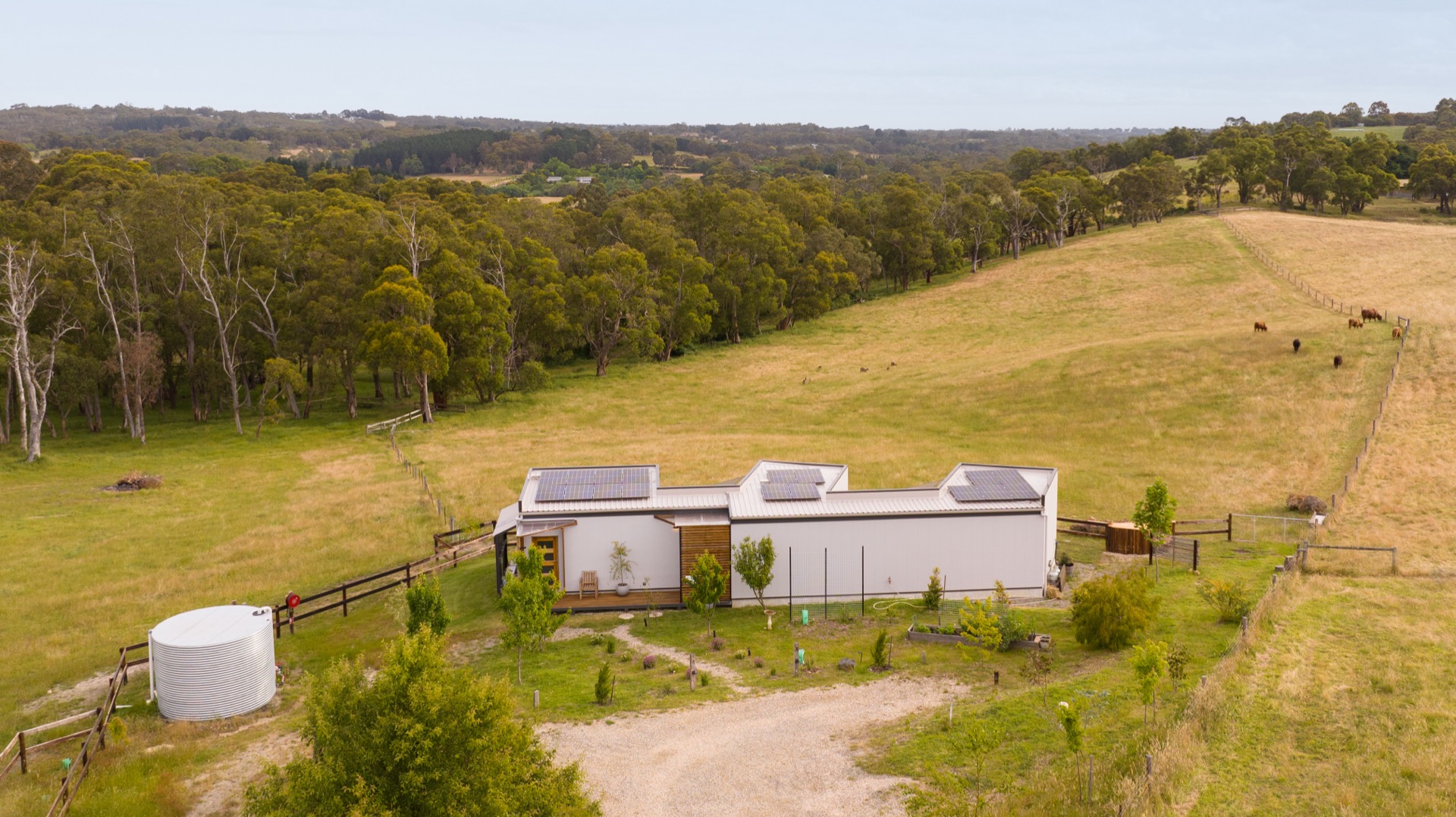
Off-grid accommodation in South Australia means a building that is not connected to mains power, mains water, or mains gas. Everything the house needs, it produces itself. Solar panels on the roof. Batteries in the shed. Rainwater in the tank. That is it.
At Casa Luna, you will find heated floors, a gas kitchen with dishwasher, Netflix on a Smart TV, a Nespresso machine, and an outdoor bath under the stars. The house just happens to run on sunlight instead of a power line.
The distinction matters because people assume off-grid means sacrifice. It does not. It means independence. The house does not need the grid. And that independence is what creates the experience — the silence, the darkness, the sleep.
What off-grid actually means
The term gets thrown around loosely. Some places call themselves off-grid because they are in a remote location, even though they are connected to mains power. Others are genuinely disconnected but offer a camping-level experience.
True off-grid accommodation means the building generates its own power (usually solar), collects its own water (usually rainwater), and manages its own waste. There is no power line running to the property. No water main. No gas connection. The house is self-sufficient.
This is different from being remote. A house can be off-grid and five minutes from town. It can also be connected to every utility and two hours from the nearest city. Off-grid describes how the building works, not where it is.
At Casa Luna, we are off-grid and three minutes from Hahndorf. You are not in the middle of nowhere. You are in the Adelaide Hills, surrounded by wine country and small towns. You just happen to be staying in a house that does not need any of the infrastructure that normally makes that possible.
How solar power works in an off-grid house
South Australia gets some of the best solar exposure in the world. That is not tourism marketing — it is geography. The state sits at a latitude that delivers strong, consistent sunlight for most of the year.
Casa Luna runs on rooftop solar panels paired with Tesla Powerwalls. During the day, the panels generate more power than the house needs. The excess charges the batteries. At night, the batteries run everything — lights, heated floors, hot water, the dishwasher, your phone charger.
You will not notice. The lights do not flicker. The power does not cut out at midnight. The gas cooktop works. The dishwasher works. The washing machine works. The only difference is that nothing you are using came from a coal plant.
On overcast days, the Powerwalls carry the load. They are designed for it. South Australian winters bring shorter days and more cloud cover, but the system is sized to handle it. In three years of hosting, we have never had a guest lose power.
The monitoring is automatic. We can see the battery levels remotely and the system manages itself. If the batteries ever dropped below a threshold — which has not happened — a backup generator would kick in. But it has never been needed.
This is what surprises most guests. They expect to notice they are off-grid. They expect flickering lights, or a limit on how long they can shower, or a request to not use the heater. None of that. The house runs like any other house. It just runs on sunlight.
Rainwater — better than what comes out of city taps
This surprises people. Rainwater collected from a clean roof and properly filtered tastes noticeably better than town water. No chlorine. No fluoride. No treatment chemicals. Just water.
Our tanks collect rain from the roof, filter it through a multi-stage filtration system, and deliver it to every tap in the house. The shower, the kitchen, the bath — all rainwater. Guests comment on it more than almost anything else. The shower feels different. The water in the kettle tastes cleaner. It is one of those things you do not notice until you experience the alternative.
There is plenty of it, too. The Adelaide Hills get reliable rainfall — roughly 800mm a year in our area. Our tanks hold enough to run the house through the dry months without rationing. We have never had to truck water in.
The outdoor bath runs on rainwater too. Forty degrees of filtered rainwater under stars, heated by a system that runs on solar-charged batteries. There is something fitting about that — the whole experience powered by sun and rain.
Why people sleep better in off-grid accommodation
We hear this constantly. Guests tell us they slept deeper at Casa Luna than they have in months. Sometimes years.
There is science behind it, but you do not need the science to feel it.
When a house is not connected to mains electricity, there is no electromagnetic hum. No standby lights blinking in every room. No street lights leaking through curtains. No power substation humming three streets away. The darkness is actual darkness.
Your circadian rhythm notices, even if you do not. Melatonin production — the hormone that regulates sleep — works the way it is supposed to when there is no artificial light pollution. The body reads the darkness as a signal to wind down, and it does so more completely than it can in a city bedroom where light leaks through the curtains and a dozen LEDs glow on standby.
Add the quiet of a farm valley — no traffic, no sirens, no late-night neighbours, no garbage trucks at five in the morning — and your nervous system does something it rarely gets to do. It stands down.
The quiet out here is not just an absence of noise. It is a presence of something else. Frogs in the evening. Owls at night. Wind through the eucalyptus. The occasional low sound of cattle moving in the paddock. These are the sounds your nervous system reads as safe. The deep sleep follows.
People do not just rest here. They recover. We have had guests tell us they fell asleep at eight in the evening and woke at seven the next morning — something they have not done since they were children. That is not the mattress, though the mattress is good. It is the environment.
What off-grid accommodation is not
Off-grid accommodation in South Australia is not camping. It is not glamping. It is not a compromise.
You are not giving anything up. You are staying in a properly built, properly insulated, properly heated home that simply does not need the grid. The appliances are the same quality you would find in any well-equipped holiday rental. The comfort is the same or better.
The WiFi works. We run internet on a separate system — a 4G connection with a good antenna. It works like any other connection. You can stream, browse, and video call. Most guests choose not to, but the option is there.
The only thing missing is the noise. No traffic. No neighbours. No hum from power infrastructure.
That absence is the thing guests notice most. They arrive, put their bags down, step outside, and stop. Something is different and it takes them a moment to realise what it is. The world is quiet.
The growing eco stays movement in South Australia
South Australia is leading this in Australia, quietly. The state's renewable energy infrastructure is the most advanced in the country — South Australia regularly generates over 70% of its electricity from renewables — and that ethos has filtered into its accommodation sector.
CABN builds off-grid cabins in bushland settings across the state. Their properties are architecturally designed, compact, and focused on immersion in the landscape. They have locations in the Adelaide Hills, McLaren Vale, the Barossa, and further afield.
Nest & Nature offers eco-conscious stays in the Adelaide Hills. Smaller operations focused on sustainability and connection to the landscape.
Casa Luna — our place — is a fully off-grid private retreat on a working cattle farm in Bridgewater, three minutes from Hahndorf. We are a farm stay in the Adelaide Hills that also happens to be one of the most sustainable accommodation options in the region.
What these places share is not an aesthetic. It is a conviction that you can offer genuine comfort with a fraction of the environmental footprint. No mains power. No mains water. No gas line. And no sacrifice.
The demand is growing because the idea makes sense. People want to travel lighter. They want to know their holiday did not cost the earth what it cost them. And they are discovering that the off-grid experience — the silence, the darkness, the sleep — is not just sustainable. It is better.
Sustainability beyond the power bill
Off-grid is the most visible part of sustainable accommodation, but it is not the only part.
At Casa Luna, sustainability runs through the whole property. The building materials were chosen for longevity and low environmental impact. The landscaping uses native plants that do not need irrigation. The cattle on the property are rotationally grazed — moved between paddocks to allow the pasture to recover, which improves soil health and sequesters carbon.
We use refillable dispensers for soap and shampoo instead of single-use bottles. Cleaning products are biodegradable. Waste is separated and recycled. These are small things individually, but they add up.
The broader point is that sustainability in accommodation is not just about power sources. It is about how the building sits in the landscape. Whether it takes from the place or contributes to it. Whether it will still be here in fifty years, doing its thing, without needing the grid to keep it alive.
Practical things to know before you book off-grid accommodation
Off-grid accommodation runs on stored energy, so a few things are worth knowing:
Charge your devices before you arrive. There are plenty of outlets, but arriving with a full phone and laptop means you are not drawing from the batteries on your first evening.
The hot water is genuinely hot. Solar hot water systems in South Australia work extremely well. Long showers are fine. The outdoor bath takes a while to fill — plan ahead — but the water is properly hot when it gets there.
You will not lose WiFi. Our internet runs on a separate system. It works like any other connection. Stream a movie, check your emails, look up the restaurant you want to book. It all works.
Bring what you want to drink. We are on a farm, not next to a bottle shop. The nearest town — Hahndorf — is three minutes away, but having what you need on arrival makes the first evening better. If you visit any cellar doors on the way (and you should — see our guide to Adelaide Hills wineries), bring a couple of bottles back.
Bring groceries. We provide breakfast provisions — local bread, eggs, butter, seasonal fruit — but if you want to cook dinner, bring your ingredients. The kitchen has everything else you need: pots, pans, knives, spices, a proper oven.
Let the quiet in. This is the real tip. Turn your phone off for an evening. Do not just silence it — off. Sit outside. Listen to absolutely nothing. Then listen to what replaces the nothing: frogs, wind, birds settling, the occasional sound of cattle. That is what you came for.
Why we built Casa Luna off-grid
We did not go off-grid to make a statement. We went off-grid because we are building on a farm in the Adelaide Hills and it was the right thing to do.
The sun is here. The rain is here. The infrastructure to capture both is mature and reliable. Connecting to the grid would have meant running cables across paddocks, digging trenches through pasture, and paying for power we did not need to buy. The cost of grid connection would have been significant — and unnecessary.
So we did not.
The result is a house that costs almost nothing to run, produces no emissions, and gives guests something they cannot get in the city — real silence, real darkness, and the knowledge that their stay left the place exactly as they found it.
There is also something philosophically satisfying about it. The house works with the land, not against it. It takes what the sky gives — sun and rain — and turns it into warmth, light, and clean water. On a clear day, the panels generate more than the house needs. The excess sits in the batteries, waiting for the evening. The system balances itself. It is elegant in a way that feels right for a place like this.
If you want to know more about how and why we built Casa Luna, read our story. If you want to see what a couples retreat in the Adelaide Hills looks like when it runs on sunlight, book a stay.
Off-grid accommodation in South Australia is not a trend. It is a better way to build, a better way to stay, and — if the sleep reviews are anything to go by — a better way to rest. The state's sunshine, rainfall, and renewable energy infrastructure make it one of the best places in Australia to experience what off-grid actually feels like: not sacrifice, but something closer to luxury.
For more on what the Adelaide Hills has to offer, read our Adelaide Hills weekend itinerary or our guide to romantic weekends in South Australia.