
The Benefits of Infrared Sauna: Why We Built a Panoramic One
April 9, 2026 · Wellness
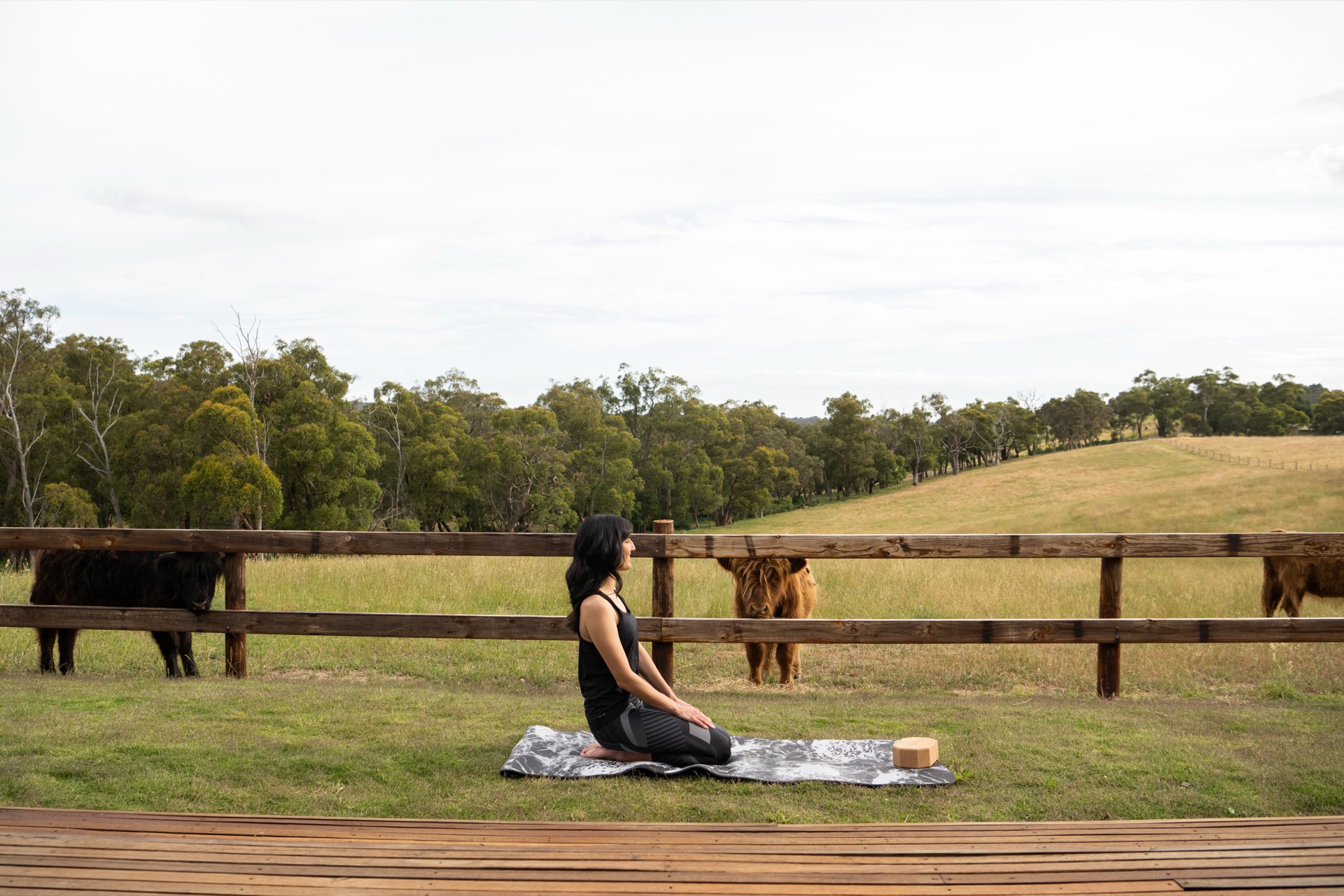
We did not build a sauna because it looked good in photos. We built it because of what it does.
When we were designing Casa Luna, we kept coming back to one question: what actually makes people feel better? Not what looks impressive on a website. What changes the way your body feels at the end of a day.
The infrared sauna benefits we'd read about — better sleep, muscle recovery, stress reduction, improved circulation — lined up with everything we wanted a stay here to do. So we built one. Not a standard wooden box in a corner. A panoramic far-infrared sauna with floor-to-ceiling glass overlooking the Adelaide Hills bushland.
Here's what we've learned about infrared saunas — from the research, from our own use, and from watching hundreds of guests discover what the heat can do.
What far infrared actually means
Most people think of a sauna as a hot room full of steam. That is a Finnish sauna — it heats the air to 80-100 degrees Celsius and you sit in it until you cannot anymore. It works, but it is intense. A lot of people find it hard to breathe. The air is heavy. Sessions tend to be short because the heat is on the surface — your skin is burning while your core temperature barely moves.
A far infrared sauna is different. Instead of heating the air around you, it uses radiant heat — the same type of warmth you feel from sunlight, without the UV. Infrared light at specific wavelengths penetrates your skin and warms your body directly from the inside out.
The temperature is lower. Somewhere between 45-65 degrees Celsius. You can breathe normally. You can sit for longer. The air feels warm but not oppressive. And because the heat reaches deeper into muscle and tissue — up to 3-4 centimetres below the skin — the effects are more than skin-deep.
There are three types of infrared: near, mid, and far. Far infrared has the longest wavelength and penetrates the deepest. It's the type most studied for health benefits and the type we chose for Casa Luna. Our sauna uses carbon fibre heating panels that distribute far-infrared heat evenly across the cabin, so there are no hot spots and no cold corners.
The practical difference is this: in a Finnish sauna, you endure the heat. In a far infrared sauna, you absorb it. The experience is gentler, longer, and — based on what our guests tell us — more deeply relaxing.
What the research says about infrared sauna benefits
The wellness industry loves to promise miracles. We would rather be honest about what is well-supported and what is still emerging.
Well-supported by research
Muscle recovery and pain relief. Infrared heat increases blood flow to soft tissue. When your muscles are warm from the inside, blood vessels dilate, delivering more oxygen and nutrients to damaged fibres. Studies published in the Journal of Athletic Training and the Scandinavian Journal of Medicine & Science in Sports have shown reduced muscle soreness and faster recovery after exercise.
If you have been hiking Mount Lofty or walking the Heysen Trail — both within fifteen minutes of Casa Luna — this is the thing your legs will thank you for. The deep heat reaches the muscle groups that surface warmth doesn't touch. Calves, quads, lower back — the places that tighten after a long walk loosen in the sauna in a way that stretching alone doesn't achieve.
Cardiovascular health and circulation. This is where the research is strongest. Regular infrared sauna use has been linked to improved cardiovascular function in multiple studies. A long-running Finnish study published in JAMA Internal Medicine, tracking over 2,000 men for more than 20 years, found that frequent sauna bathing was associated with reduced risk of cardiovascular events and all-cause mortality.
Your heart rate rises gently during an infrared sauna session — similar to a moderate walk. Blood pressure drops afterwards. Over time, regular sauna use appears to improve endothelial function — the ability of your blood vessels to dilate and contract properly. This is the same mechanism that makes exercise good for your heart, achieved through heat rather than movement.
Sleep quality. This is the benefit our guests mention most. The drop in core body temperature after a sauna session signals your body to produce melatonin — the hormone that regulates sleep onset. Multiple studies have found that evening heat exposure improves both how quickly you fall asleep and how deeply you sleep.
The timing matters. A sauna session 60-90 minutes before bed produces the strongest effect. The heat raises your core temperature, and the subsequent cooling — as your body returns to baseline — triggers a cascade of sleep-promoting processes. This is why an evening sauna at Casa Luna, followed by the outdoor bath, followed by the cool night air of the Adelaide Hills, produces sleep that guests describe as the best they've had in months.
Stress reduction and cortisol. Heat therapy lowers cortisol and promotes parasympathetic nervous system activity. In plain language: your body shifts from fight-or-flight to rest-and-repair. A study from the University of Eastern Finland found that sauna bathing reduced cortisol levels by up to 25 percent in regular users.
This isn't just a feeling. It's measurable. The infrared heat activates heat shock proteins — cellular stress-response molecules that have a protective effect throughout the body. Your muscles relax. Your breathing deepens. The mental chatter that follows you out of the city starts to go quiet.
For couples on a retreat in the Adelaide Hills, this matters. You arrive stressed. The sauna is one of the fastest ways to move your nervous system from "on" to "off." Two sessions — one on arrival, one the next morning — and most guests report feeling like they've been away for a week.
Promising but still emerging
Joint and chronic pain. Studies on rheumatoid arthritis and ankylosing spondylitis patients have shown symptom improvement with regular infrared sauna use. The mechanism appears to be reduced inflammation and improved tissue flexibility. The research is encouraging but still limited in scale.
Skin health. Some evidence suggests improved collagen production and circulation to the skin. A study in the Journal of Cosmetic and Laser Therapy found improvements in skin texture and reduced wrinkles with near-infrared exposure. Anecdotally, people report clearer skin with regular use. The research on far infrared specifically is not conclusive yet.
Immune function. There's emerging evidence that regular sauna use may support immune function through increased production of white blood cells and heat shock proteins. Some studies have found reduced incidence of common colds in frequent sauna users. Interesting, but more research is needed before we'd claim it as a definitive benefit.
Detoxification. You will sweat, and sweat does contain trace amounts of heavy metals and some environmental chemicals. But the idea that you are flushing toxins in any medically significant way is overstated by the wellness industry. You are sweating. It feels good. Your skin feels clean afterwards. That is enough — you don't need to exaggerate it.
The Casa Luna sauna: what makes it different
We looked at a lot of saunas before we chose ours. Most infrared saunas are wooden boxes. Dark, enclosed, designed to be functional. They work. But they miss something.
Floor-to-ceiling glass
Here is the part most sauna builders get wrong. They build a dark box, disconnected from everything outside.
We went the other direction. Our sauna has floor-to-ceiling glass overlooking the Adelaide Hills bushland. You sit in warmth and look out at eucalyptus canopy, sky, birds moving through the trees. In winter, you watch fog drift through the valley. In summer, the light filters through the canopy in shifting patterns.
This was not an aesthetic decision. There is solid research showing that visual exposure to nature reduces cortisol levels independently of anything else you are doing. A Japanese study on shinrin-yoku — forest bathing — found that even looking at trees through a window lowered stress hormones. Multiple studies have replicated this finding.
So you are getting the infrared sauna benefits — the heat, the circulation, the muscle recovery — and layering on the calming effect of watching bushland. The two things compound each other. Heat plus nature exposure is more effective than either one alone.
Far-infrared carbon panels
The sauna uses carbon fibre heating panels rather than ceramic heaters. Carbon panels produce a more even, lower-intensity heat that covers a larger surface area. You don't get hot spots or the feeling that one part of your body is cooking while the rest is cool.
The panels heat up quickly — about ten minutes to reach operating temperature — and maintain consistent heat throughout the session. The far-infrared wavelength they produce is in the range most studied for health benefits: 6-12 microns.
Bluetooth connectivity
The sauna has Bluetooth speakers. You can play music, a podcast, or a meditation. But most guests don't. They sit in silence, watching the bush, and tell us afterwards that the quiet was the best part.
The option is there. We won't judge either way.
No clock, no screen
There is no clock in the sauna. No screen. No timer counting down. Just glass and trees and the sound of birds. Most guests tell us they lose track of time completely. That is the point.
We've had guests intend to do twenty minutes and emerge after fifty, convinced it had been half an hour. The combination of gentle heat and natural views does something to the perception of time. It slows down. Or rather, you stop measuring it.
The sequence that works
Over time, we have noticed a pattern in how guests use the sauna. The ones who get the most out of it follow a sequence — not because we tell them to, but because the body naturally wants it.
Start with the sauna. Twenty to thirty minutes. Let the heat build slowly. Don't try to make it as hot as possible. Find a temperature that lets you relax completely — for most people that's around 55-60 degrees. Watch the light change in the valley.
Step outside. The Adelaide Hills air — especially in the evening — is cool and clean. The contrast between the infrared warmth and the outside air is sharp and immediate. Your skin wakes up. Your breathing deepens. Stand there for a minute. Let the cold do its work.
Then the outdoor bath. Warm water, open sky, the smell of eucalyptus. Your muscles are already loose from the sauna. The bath takes you the rest of the way. In winter, the steam rises off the water and the stars are overhead and you're in one of those moments that you'll remember for a long time.
Then bed. Your core temperature is elevated from the sauna and bath. Over the next hour, it drops — and that drop is the signal your body uses to initiate deep sleep. The hydronic heated floors keep the cottage warm. The bed has quality linen and a proper weight doona. You'll sleep the way you slept as a child.
By the time you are done, you are not the same person who arrived that afternoon. Something has unwound that you did not know was wound.
When to use the sauna
The sauna is available to you for your entire stay. Use it as many times as you like. There is no schedule and no booking required — it's yours.
Morning sessions are good for stiffness and slow starts. If you wake up tight from yesterday's walk or just feeling the weight of accumulated stress, twenty minutes in the sauna before breakfast changes the shape of the entire day.
Afternoon sessions suit the post-activity window. After a drive through the wineries near Hahndorf, after a walk in the conservation park, after exploring Hahndorf's main street — come back to the cottage and let the sauna undo the day's tension.
Evening sessions are the ones guests remember. The light in the valley changes. The birds quiet down. The temperature outside drops and the contrast with the sauna's warmth becomes more pronounced. Evening is when the sauna-bath-bed sequence works best, and it's when most guests have their "moment" — the point where the trip shifts from pleasant to memorable.
Who benefits most
Infrared sauna benefits apply to almost everyone, but certain groups seem to notice the effects more strongly.
People with desk jobs. Hours of sitting create patterns of tension in the neck, shoulders, and lower back that surface warmth doesn't reach. The deep-penetrating heat of far infrared reaches those deep muscle groups and releases tension that massage and stretching leave behind.
Active people. If you walk, run, cycle, or do any regular exercise, infrared sauna use after activity is one of the best recovery tools available. The increased blood flow to muscles accelerates repair and reduces next-day soreness.
People who struggle with sleep. This is the most consistent feedback we receive. Guests who describe themselves as poor sleepers report sleeping deeply after an evening sauna session. The thermoregulatory mechanism — heat followed by cooling — appears to bypass the mental patterns that keep people awake.
People who are simply exhausted. Not from exercise. From life. The combination of heat, silence, nature, and permission to do nothing is remarkably effective at resetting a nervous system that has been running on stress for too long.
The thing guests mention most
We read every review. We pay attention to what people actually say, not what we hope they will say. And the sauna comes up more than anything else.
Not the bath. Not the views. Not the breakfast provisions. Not the Highland cattle — though they're a close second. The sauna.
People describe it as the moment the trip shifted. The moment they stopped thinking about work, about emails, about the drive home. The heat and the glass and the quiet did something that the rest of the day had been building toward.
We think that is because it is the most unfamiliar experience. Most people have had a bath. Most people have seen a view. But sitting in gentle, penetrating warmth while looking out at bushland with no sound but birdsong — that is not something most people have done before.
It stays with them.
Casa Luna is a couples retreat in the Adelaide Hills with a panoramic far infrared sauna, outdoor bath, and views of the valley. If what you have read here sounds like what you need, book your stay. Or read more about the property.