
Why Slow Travel Matters: A Case for Going Nowhere in Particular
April 9, 2026 · wellness
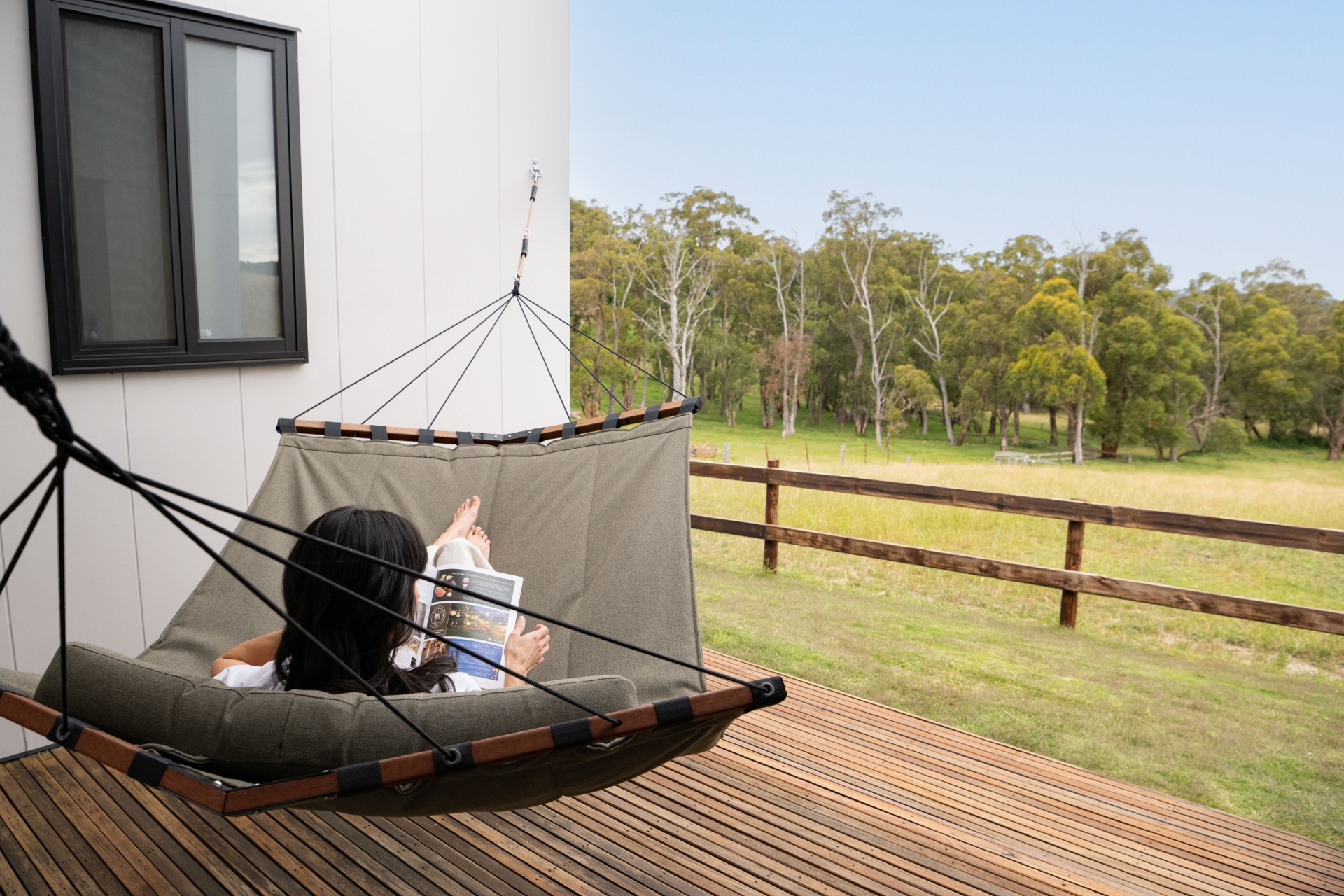
There's a difference between going somewhere and arriving somewhere.
Slow travel is the art of arriving. Not at a destination, but at a state of mind where the clock stops mattering and the place you're in becomes enough. It sounds simple. For most of us, it's the hardest thing we do on a holiday.
Most travel is movement — airports, highways, check-ins, check-outs. You cover ground. You tick boxes. You come home tired from the thing that was supposed to rest you. Your phone has 400 photos and you can't remember what the air smelled like.
We've been watching this pattern for years, hosting couples at Casa Luna in the Adelaide Hills. People arrive on a Friday evening already composing the weekend in their head — where to eat, what to see, which winery to hit first. By Sunday morning, something has shifted. They're sitting on the verandah in silence, watching the fog lift off the valley, and they don't want to leave.
That shift is slow travel. And it matters more now than it ever has.
What slow travel actually means
Slow travel is not a new idea. The term grew out of the slow food movement that started in Italy in the 1980s, when Carlo Petrini protested the opening of a McDonald's near the Spanish Steps in Rome. His argument was simple: fast is not better. Fast food replaces something that matters — the act of cooking, eating, and sharing a meal — with something efficient but empty.
Slow travel makes the same argument about the way we move through the world.
It does not mean travelling slowly in the literal sense. You can fly to get there. You can drive. The speed of your transport is not the point. The point is what you do when you arrive.
Slow travel means staying longer in fewer places. It means choosing depth over breadth. It means walking instead of driving when you can. Cooking a meal in a local kitchen instead of eating every meal at a restaurant. Sitting still when every instinct says you should be doing something.
It means letting a place teach you something instead of consuming it.
Why it matters now
We live in an attention economy. Every app on your phone is engineered to fragment your focus into smaller and smaller pieces. The average person checks their phone 96 times a day. We context-switch so often that sustained attention — the kind you need to actually notice a place — has become a skill most people have lost.
Travel was supposed to be the antidote. Get away from it all. But the travel industry has adopted the same logic as the attention economy. See more. Do more. Optimise your itinerary. Here are the top ten things you can't miss. Here's an app to plan your perfect day.
The result is holidays that feel like work with better scenery. You come home with experiences, technically, but you never stopped long enough to absorb any of them.
Slow travel pushes back against this. It says: you don't need to see everything. You need to see one thing properly. One morning. One valley. One conversation over a long breakfast where nobody is looking at a screen.
The research backs this up. A study from the University of Tampere found that the strongest predictor of holiday satisfaction was not the number of activities completed but the degree to which travellers felt they could relax and be present. Another study published in the Journal of Travel Research found that tourists who spent more time in fewer locations reported higher levels of well-being than those who visited many destinations in the same period.
We did not need the research to know this. We see it every week. But it's nice to have the numbers.
What slow travel looks like in practice
At a place like Casa Luna, slow travel is not a philosophy you have to work at. It's what happens when you remove the things that prevent it.
There is no television. There is no schedule. There are no other guests. The property is yours — twelve acres of paddocks, bushland, and Highland cattle moving through the fog.
A slow travel day here might look like this:
You wake up without an alarm. The cottage has heated floors, so the first thing you feel is warmth under bare feet. You make coffee — proper coffee, from the Nespresso machine or the French press — and you carry it to the verandah.
The valley is doing something. It's always doing something. Fog lifting. Light changing. A pair of kookaburras arguing in the gum trees. The cattle have moved to a different part of the paddock since yesterday. You notice this because you have nowhere else to look.
You eat breakfast. Not quickly. The provisions are there — eggs, bread, local preserves, fruit. You cook slowly because there is no reason to cook fast.
The morning disappears. You're not sure how. You read a few pages of a book. You talk. You sit in the infrared sauna and watch the bush through the glass walls. You don't check your phone because it doesn't occur to you.
In the afternoon, you might drive to Hahndorf — three minutes down the road — and walk the main street. Or you might visit a cellar door and taste wine with a winemaker who has time to talk because it's a quiet Tuesday.
Or you might not leave the property at all. You might fill the outdoor bath, lie in hot water under open sky, and watch the light change over the hills until it's dark.
That's a full day. More than full. You did almost nothing and you felt everything.
The Adelaide Hills as a slow travel destination
The Adelaide Hills is one of the best places in South Australia for slow travel, and most people don't think of it that way.
It's twenty minutes from Adelaide. You don't need a flight or a ferry. You don't need to take a day off for travel. You leave the city on Friday afternoon and by sunset you're somewhere that feels like a different country — green hills, vineyards, small towns that still close on Sundays.
The geography helps. The hills create valleys that feel enclosed and private. The roads wind. The mobile reception gets patchy in the right places. The landscape changes with the seasons in ways that flat country doesn't — burnt gold in summer, deep green in winter, carpeted in wildflowers in spring.
The food and wine scene rewards slow exploration. The Adelaide Hills is a cool-climate wine region with dozens of cellar doors, most of them small, most of them run by people who actually made the wine. You don't need to visit six in a day. Visit one. Sit down. Ask questions. Let the winemaker pour you something that isn't on the list.
The towns — Hahndorf, Stirling, Crafers, Lobethal — are walking-pace places. You can cover the main street of Hahndorf in ten minutes, but if you actually stop at the cheese shop, the chocolatier, the pub with the fireplace, an afternoon vanishes.
There is a rhythm to the hills that suits slow travel naturally. The morning fog. The afternoon light. The way the air smells different at dusk. You can't experience any of this in a rush.
The science of doing less
There is a growing body of research on what happens to your brain and body when you stop being busy.
Chronic busyness keeps your nervous system in a sympathetic state — fight or flight. Your cortisol stays elevated. Your sleep suffers. Your attention fragments. Over time, this becomes your baseline. You forget what calm feels like.
Rest — real rest, not scrolling on the couch — activates your parasympathetic nervous system. Heart rate drops. Breathing deepens. Cortisol falls. Your brain enters a state that neuroscientists call the default mode network, which is where creativity, self-reflection, and emotional processing happen. This is the state you're in when you stare out a window and think about nothing and then suddenly have a good idea.
You cannot enter this state while checking your phone. You cannot enter it while following an itinerary. You need unstructured time in a calm environment.
This is what slow travel provides. Not a list of things to do, but permission to do nothing. And "nothing" turns out to be one of the most productive things your brain can do.
The couples question
Most of our guests are couples. Many of them tell us, on the way out, that they talked more in two days at Casa Luna than they had in months at home.
This is not a coincidence. At home, couples exist in parallel. You're in the same house but you're doing different things — screens, tasks, logistics, children, work. You communicate in shorthand. You manage the household. The deep, unstructured conversation that relationships need gets squeezed out by efficiency.
Slow travel puts two people in a beautiful place with nothing to do and nowhere to be. The conversation that follows is not forced. It's not a relationship exercise. It just happens, because the space allows it.
One couple told us they made a decision they'd been putting off for two years, sitting by the fire pit on their first evening. Not because they planned to. Because the quiet gave them room to think clearly for the first time in months.
A couples retreat in the Adelaide Hills doesn't need workshops or couples yoga or facilitated experiences. It needs a beautiful place, real privacy, and enough time for the silence to become comfortable.
How to practise slow travel
You do not need to go anywhere special to practise slow travel. But it helps.
Start by reducing the plan. If you have six things on your itinerary, cut it to two. If you have two, consider cutting it to one. Leave empty space in your day and see what fills it.
Turn off notifications. Not airplane mode — that feels like deprivation. Just silence the things that pull you out of where you are.
Cook a meal. Even a simple one. The act of preparing food in an unfamiliar kitchen, with ingredients you bought that morning from a farm gate or a local market, connects you to a place in a way that restaurants cannot.
Walk without a destination. Not a hike with a summit. A walk where you turn when you feel like turning and stop when you feel like stopping.
Stay an extra night. This is the single best thing you can do for any trip. The first day is decompression. The second day is presence. The third day is the one you remember.
And choose accommodation that supports the pace. A hotel in the middle of a busy town will pull you back into activity. A private farm stay in the Adelaide Hills — somewhere with space, quiet, and nothing competing for your attention — makes slowness the path of least resistance.
The places you remember
Think about the best trip you've ever taken. Not the most impressive. The best.
Chances are it wasn't the one with the packed schedule. It was the one with the long afternoon. The unexpected conversation. The morning where you sat somewhere beautiful and didn't move for an hour.
Those moments don't happen when you're rushing. They happen when you're still.
Slow travel is not a trend. It's a correction. A recognition that the point of going somewhere is not to accomplish something but to feel something. To arrive — not at a place, but at yourself, in a place.
The Adelaide Hills is twenty minutes from the city. Casa Luna is twelve acres of quiet. The cattle are in the paddock. The fog is in the valley. The coffee is hot and there is nowhere to be.
Book a stay and find out what happens when you stop moving.